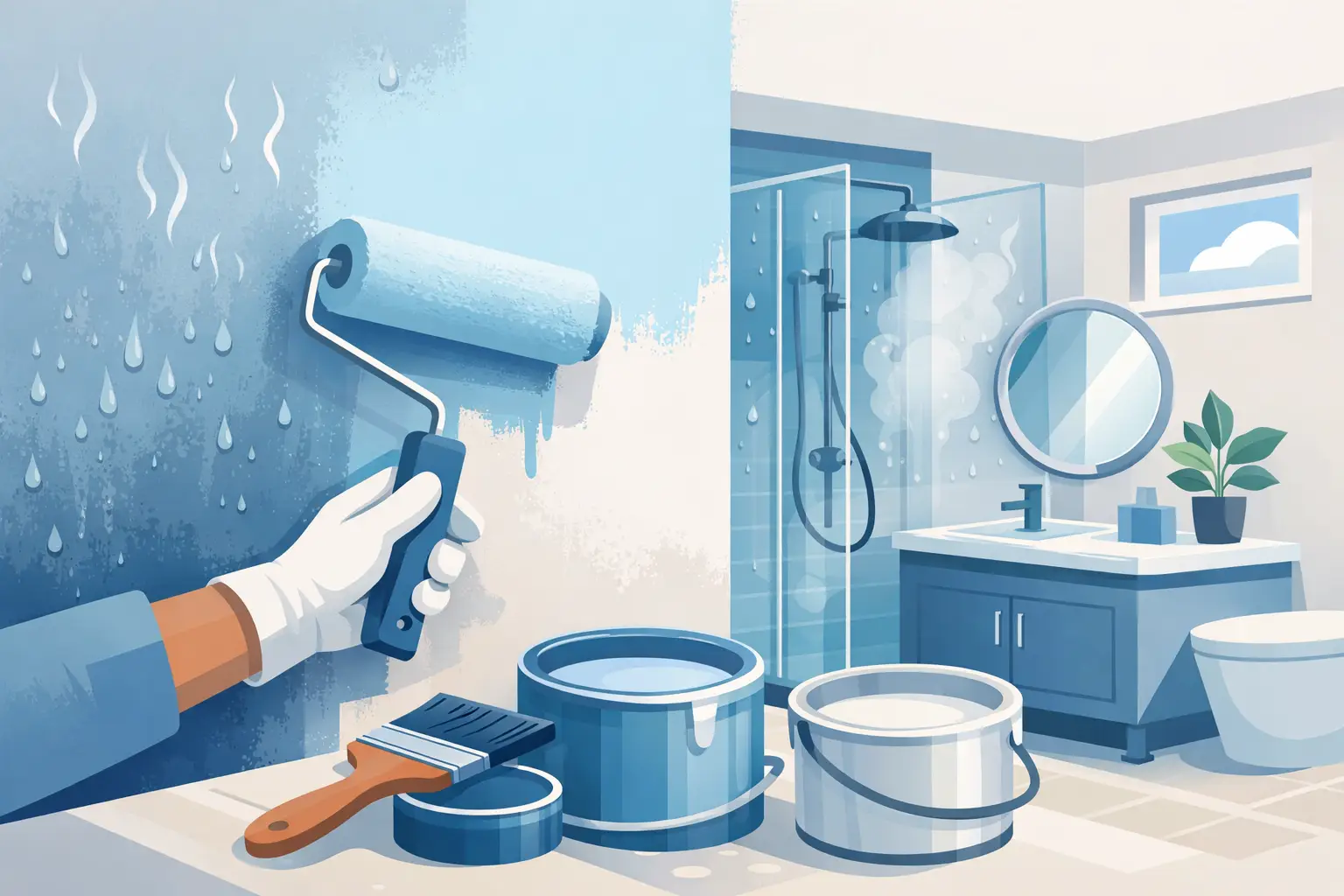
A bathroom can look freshly painted on Monday and start showing soft spots, peeling edges, or mildew stains not long after if the wrong product was used. That is why choosing the best paint for humid rooms is less about picking a nice color and more about matching the paint to moisture, airflow, and daily wear.
In homes and commercial spaces alike, humid rooms work harder than dry ones. Bathrooms trap steam. Kitchens deal with grease and moisture at the same time. Laundry areas swing between damp air and heat. If the paint film is not built for those conditions, the finish breaks down faster, cleaning becomes harder, and the room starts to look tired well before it should.
What makes humid rooms different
Humidity changes how paint performs after it dries. Moist air settles on walls and ceilings, especially around shower zones, sinks, cooking areas, and poorly ventilated corners. Over time, that moisture can seep into tiny surface flaws, stress the paint film, and create the conditions mildew loves.
This is why standard wall paint often disappoints in bathrooms and utility spaces. It may look fine at first, but if it lacks moisture resistance and washability, the finish can chalk, blister, or stain. In commercial settings such as pantry areas, washrooms, or back-of-house utility rooms, the pressure is even greater because surfaces are cleaned more often and used more heavily.
The best paint for humid rooms usually has three qualities
When professionals talk about the best paint for humid rooms, they are usually looking for three things: moisture resistance, mildew resistance, and durability during cleaning. Those qualities matter more than marketing phrases on the can.
Moisture resistance helps the paint film stay intact when exposed to steam and condensation. Mildew resistance slows down surface growth in damp environments, though it does not replace good ventilation. Durability matters because humid rooms need regular wiping, and weak paint starts to burnish or wear away under repeated cleaning.
A paint that covers well but cannot handle scrubbing is rarely the right long-term choice. On the other hand, a highly durable coating may still fail if the wall underneath was not prepared properly. Paint selection and surface preparation always work together.
Which paint type works best
For most interior humid rooms, high-quality acrylic latex paint is the safest and most practical option. It dries with good flexibility, resists cracking better than older oil-based products, and generally handles moisture well when paired with proper primer and prep. It also tends to have lower odor and easier cleanup, which matters in occupied homes and active workplaces.
Paints labeled for bathrooms, kitchens, or high-moisture areas are often a smart choice because they are formulated to resist mildew and frequent washing. That said, the label alone is not enough. Product quality varies, and premium lines from trusted paint brands usually hold up better over time than basic contractor-grade options.
In some severe-use environments, a more specialized coating may be worth considering, especially where there is constant dampness or repeated cleaning with stronger products. But for most residential bathrooms, kitchens, and laundry rooms, a premium acrylic system is the right balance of performance, appearance, and cost.
The right finish matters more than many people expect
Finish affects both appearance and performance. In humid rooms, flat paint is usually the weakest option because it absorbs moisture more easily and is harder to clean. It can work on some ceilings in low-condensation spaces, but even then, there are better choices if ventilation is poor.
Eggshell and satin are common choices for walls because they offer a smoother, more washable surface without looking overly shiny. Satin is often the sweet spot for many bathrooms and kitchens. It handles cleaning well and gives the surface a tighter finish that stands up better to humidity.
Semi-gloss is stronger still and works well on trim, doors, and areas that need more frequent wiping. Some people also choose semi-gloss for bathroom walls, though it can highlight surface imperfections. If the wall has patchy plaster, uneven skim coating, or old repairs, satin often gives a more balanced result.
Best paint choices by room
Bathrooms usually need the strongest moisture defense, especially if there is frequent hot shower use and limited airflow. In these spaces, a premium bathroom-rated acrylic paint in satin or semi-gloss is often the most reliable choice. Ceilings should not be overlooked either. They take direct steam exposure and are often the first place where peeling starts.
Kitchens need a slightly different kind of protection. Humidity matters, but so do grease, food splatter, and regular wiping. A durable satin or semi-gloss acrylic paint is usually the best fit. Around stoves and sinks, easy cleaning becomes just as important as moisture resistance.
Laundry rooms can be deceptively harsh. They may be smaller, less ventilated, and exposed to cycles of damp air. Here again, a washable acrylic paint with mildew resistance is a strong option. If the room also has storage cabinets, utility shelving, or service doors, matching those surfaces with tougher enamel finishes can improve the overall result.
Why primer and prep are part of the answer
Even the best paint for humid rooms will struggle if it is applied over dirty, powdery, or damaged surfaces. This is where many paint jobs fail early. Soap residue, grease, old mildew, flaking paint, and damp plaster all interfere with adhesion.
Proper preparation starts with cleaning the surface thoroughly and removing any loose material. If mildew is present, it must be treated before painting. Stains and patched areas often need primer so the topcoat bonds evenly and dries to a consistent finish. In older properties, hairline cracks, chalking, or minor water damage may also need repair first.
A good primer helps in several ways. It improves adhesion, seals porous patches, and creates a more stable base for the finish coats. In rooms with previous peeling or recurring moisture marks, skipping primer to save time usually ends up costing more later.
Ventilation still matters
Paint can resist humidity, but it cannot solve a ventilation problem by itself. If steam stays trapped in the room for long periods, even premium coatings are under constant stress. Exhaust fans, openable windows, and routine airflow all help protect the finish.
This is especially relevant in bathrooms without windows, compact apartment kitchens, and internal laundry spaces. If a room always feels damp long after use, the paint system should be treated as one part of the solution, not the whole fix. A professional assessment can help identify whether surface failure is really a paint issue or a moisture management issue.
Common mistakes when choosing paint for humid spaces
The first mistake is choosing by price alone. Budget paint may reduce upfront cost, but it often needs repainting sooner and can make maintenance harder. The second is picking a finish based only on appearance. A very matte wall may look modern, but in a steamy bathroom it can be the wrong tool for the job.
Another common problem is painting over existing damage without addressing the cause. If the wall already has bubbling, stains, or soft plaster, repainting without repairs only hides the issue briefly. Finally, many people underestimate how much difference workmanship makes. Clean lines, proper drying time, even coverage, and careful prep all influence how long the finish lasts.
When it makes sense to bring in professionals
Humid rooms are not the best place to guess. If the space has active peeling, mold stains, spalling concrete, cracked plaster, or repeated paint failure, professional handling can save time and avoid repeat work. The right team will assess the room condition, recommend a suitable paint system, prepare the surface properly, and complete the job with minimal disruption.
For property owners who want a polished result without managing the details, that matters. A dependable contractor can also help with finish selection, moisture-prone problem areas, and practical choices that fit both budget and long-term performance. That is the approach My Paint Job takes because a paint job should not just look fresh on handover day. It should keep performing in real conditions.
The best choice for a humid room is rarely the cheapest can on the shelf or the glossiest finish in the brochure. It is the paint system that matches the room, the surface, and the way the space is actually used. Get that combination right, and the room stays cleaner, sharper, and easier to maintain for much longer.