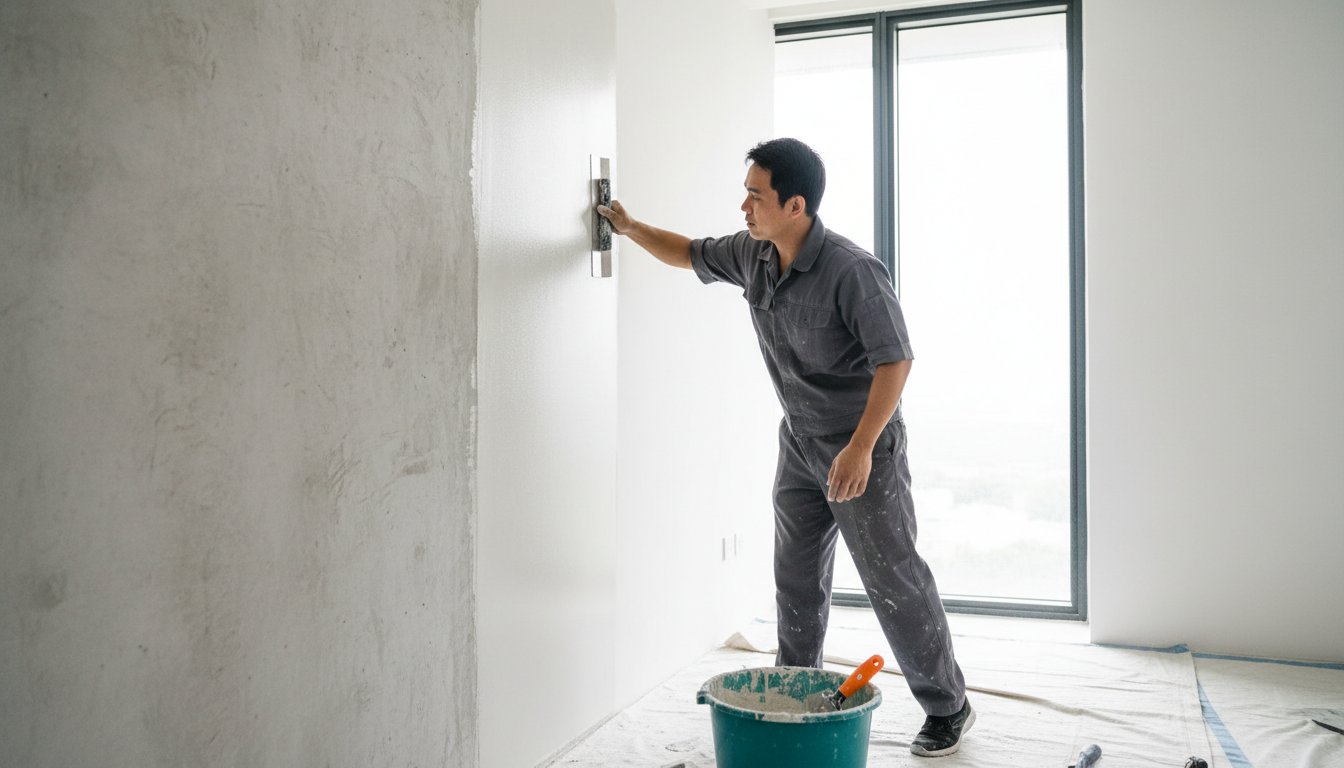

A fresh coat of paint can make a room feel cleaner, brighter, and more valuable, but the method matters more than most property owners expect. When it comes to spray painting vs roller painting, the right choice affects finish quality, project speed, cost, overspray risk, and how much disruption your space will face during the job.
For homeowners, landlords, and business operators, this is rarely just a technical decision. It is a practical one. You want walls, ceilings, doors, or exterior surfaces to look sharp, last well, and get completed without unnecessary mess or delays. That is why understanding where each method performs best helps you make a smarter decision before work begins.
Spray painting vs roller painting: what is the real difference?
Spray painting applies paint through a machine that atomizes it into a fine mist. This method creates a smooth, even coat and is often used for large surfaces, detailed profiles, metalwork, ceilings, and jobs that need a uniform appearance.
Roller painting applies paint directly with a roller cover, usually after cutting in edges with a brush. It is one of the most common approaches for interior walls and ceilings because it offers good coverage, controlled application, and less airborne paint.
On paper, spray painting sounds faster and roller painting sounds simpler. In practice, the better option depends on the surface, the condition of the space, the paint type, and how much preparation is needed to protect nearby areas.
When spray painting is the better choice
Spray painting is often the preferred option when appearance and speed matter across broad or irregular surfaces. It can produce a refined, factory-like finish that is difficult to match with a roller, especially on doors, trim, cabinets, gates, and textured or detailed materials.
In commercial settings, spraying can also be efficient for larger open areas where masking can be done properly and work needs to move quickly. Warehouses, retail units under renovation, exterior facades, metal grills, and some ceiling applications can benefit from this method.
Another strength of spray painting is consistency. Because the paint is applied in fine particles, it can reach crevices, corners, and uneven textures more evenly than a roller. That matters on surfaces like metal railings, decorative moldings, louvers, and rough exterior walls.
Still, speed during application does not mean less work overall. Spray jobs usually require more surface preparation, more masking, and tighter dust and overspray control. If that prep is rushed, the final result can create more problems than it solves.
The main advantages of spray painting
The biggest advantage is finish quality. Spray painting can leave a smooth surface with minimal roller marks or texture buildup, which is especially useful when you want a polished, modern look.
It is also faster on the right site conditions. Once furniture, floors, fixtures, glass, and adjacent surfaces are covered properly, spraying can move quickly across large sections.
For difficult shapes, spray equipment can cover what rollers struggle to reach. This is why many professionals choose it for gates, metal frames, wood features, and other surfaces with grooves or narrow angles.
The trade-offs with spray painting
Overspray is the biggest concern. Fine paint particles can drift onto floors, windows, furnishings, electronics, or nearby surfaces if containment is not handled carefully. In occupied homes and active workplaces, that risk matters.
Spray painting also tends to use more materials in some scenarios because part of the paint becomes airborne rather than landing directly on the target surface. Equipment setup, masking, and cleanup can add labor time too.
Ventilation is another factor. Interior spray work needs proper air management, especially in enclosed rooms or buildings that remain in use during the project.
When roller painting makes more sense
Roller painting remains the practical choice for many residential interiors, especially occupied apartments, condos, HDB flats, and offices where cleanliness and control are priorities. It is reliable, versatile, and often more cost-effective for standard wall and ceiling work.
A roller applies paint directly to the surface with less airborne spread, which means there is generally less masking required and lower risk to nearby furniture or fixtures. That makes it well suited for homes where people are still living in the space or businesses that need to limit disruption.
Rollers also build a slightly thicker coat in a controlled way, which can help with coverage on walls that need refreshing. For repaints over existing interior surfaces, this method is often straightforward and dependable.
The main advantages of roller painting
Control is the biggest benefit. Painters can work section by section, manage paint load carefully, and reduce the chance of mist spreading through the room.
Roller painting is also usually more economical for standard interiors. Setup is simpler, preparation is less intensive, and the process fits well for bedrooms, living rooms, offices, hallways, and most painted drywall or plaster walls.
For occupied properties, roller application often supports a cleaner workflow. That matters for clients who want a professional result without feeling like their entire space has turned into a sealed-off job site.
The trade-offs with roller painting
The finish is not as ultra-smooth as spray painting, particularly on doors, trim, and surfaces where texture is more noticeable. Depending on the roller cover and paint used, a subtle stipple can remain.
Rollers are also slower on detailed surfaces. If you are painting grills, slats, moldings, or heavily textured areas, the labor can increase significantly and coverage may still be less uniform than spraying.
On very large projects, roller painting can be less efficient than spraying if the site is empty and easy to protect.
Which method gives the better finish?
If the goal is the smoothest possible finish, spray painting usually wins. That is why it is commonly chosen for feature elements, cabinetry, doors, metal surfaces, and high-visibility commercial areas where a sleek appearance matters.
If the goal is a clean, durable, attractive finish on everyday walls and ceilings, roller painting is often the smarter choice. Most homeowners do not need a sprayed finish on every wall. They need good coverage, clean lines, and a result that holds up well in daily use.
This is where professional assessment matters. A good contractor does not force one method onto every project. The right recommendation should reflect the surface condition, the room layout, occupancy, budget, and the standard of finish you expect.
Cost, speed, and disruption
Clients often assume spray painting is always faster and roller painting is always cheaper. Sometimes that is true, but not always.
Spray painting can reduce application time, but the masking and protection work can be extensive. In a furnished home, that preparation may offset the speed advantage. In an empty unit or open commercial space, spraying may become far more efficient.
Roller painting often keeps costs predictable for standard interior jobs because setup is simpler and containment is easier. It may take longer to apply, but the overall workflow can still be more practical in lived-in or operational spaces.
Disruption is another major factor. If a shop, office, or residence needs to remain partially functional, roller painting may allow more controlled staging. If the property is vacant and speed is critical, spraying may help shorten the project timeline.
Choosing the right method for your property
For most property owners, the best answer is not spray or roller across the entire job. It is often a combination of both. Walls may be rolled for control and coverage, while doors, metal gates, trim, or selected surfaces are sprayed for a finer finish.
That blended approach is common on well-managed projects because it balances quality, budget, and practicality. It also shows why painting should never be treated as just opening a can and starting work. Surface prep, protection, paint selection, and application method all affect the final result.
At My Paint Job, that is exactly how projects are approached – by matching the method to the surface, timeline, and level of finish the client wants, while handling everything from prep to cleanup with minimal hassle.
If you are deciding between spray painting and roller painting, the safest choice is to look beyond the tool itself. Focus on the condition of your space, how much disruption you can tolerate, and the finish you actually want to see every day. The right painting method is the one that gives you a cleaner result, better value, and confidence that the job was done properly.